


In 2025, nine of our solutions helped individuals, cities, and partners collectively reduce an estimated 41 million tCO2e.1

Getting around
Transportation accounts for 23% of global energy-related carbon emissions.2 No matter where you’re going or how you’re getting there, products like Google Maps aim to make each journey more optimized.

Google Maps

Fuel-efficient routing
Fuel-efficient routing uses AI to suggest routes that have fewer hills, less traffic, and constant speeds with a similar ETA. See the relative fuel or energy savings between the two routes and choose the one that works best for you.

EV charging
Find EV charging stations, including the number of available docks and fast charge options.

Transit & cycling options
Google Maps provides bus, train, subway, and ferry directions, along with walking directions, bike routes, and nearby bike and scooter shares.

Google Travel

Emissions estimates for flights
See carbon emissions estimates for nearly every flight on Google Flights, allowing you to make more sustainable travel choices.

Eco-certified hotels
Eco-certified badges signify that a hotel has been certified by an independent accredited organization as meeting high sustainability standards. You can learn more about their efforts on Google's Hotel Search.

Train route suggestions
In Google Search, find long-distance train routes, schedules, and ticket prices, along with links to complete your booking. You’ll also find train route suggestions when looking for flights on Search.
Google Maps
Fuel-efficient routing uses AI to suggest routes that have fewer hills, less traffic, and constant speeds with a similar ETA. See the relative fuel or energy savings between the two routes and choose the one that works best for you.
Find EV charging stations, including the number of available docks and fast charge options.
Google Maps provides bus, train, subway, and ferry directions, along with walking directions, bike routes, and nearby bike and scooter shares.
Google Travel
See carbon emissions estimates for nearly every flight on Google Flights, allowing you to make more sustainable travel choices.
Eco-certified badges signify that a hotel has been certified by an independent accredited organization as meeting high sustainability standards. You can learn more about their efforts on Google's Hotel Search.
In Google Search, find long-distance train routes, schedules, and ticket prices, along with links to complete your booking. You’ll also find train route suggestions when looking for flights on Search.
Saving at home
How you heat and cool your home, and where your power comes from, are impactful opportunities to save energy and money.

Solar savings estimates
With Project Sunroof, you can enter your address to get a no-cost, AI-powered estimate of your home’s potential solar savings, based on satellite imagery.


Smart thermostats for every household
Nest Learning Thermostats create an optimized schedule based on your home routine, saving you on heating bills and cooling bills. We estimate that Nest thermostats helped customers cumulatively save more than 190 billion kWh of energy from 2011 to 2025,3 which is more than the total annual electricity consumption of Malaysia.4


Heating & cooling comparisons
In certain countries, searches like “boilers” or “heat pumps” show useful information including capabilities, energy efficiency, and financial incentives.

Shopping smart
Find ways to reduce waste and save money when buying clothing, cars, and more.

Shop pre-owned
When looking for products like clothing or electronics, you can search "pre-owned" for unique and affordable previously owned options.

Electric vehicle information
Searches like “best electric cars” in AI mode show easy-to-understand comparisons of prices, battery ranges, fuel costs between models, and in some regions, financial incentives—making it easier to shop for an electric vehicle.

Recycling made easy
Use Google Search to find local storefronts and shops with recycling services—from glass bottles, to clothing, to electronics.

Prepping for extreme weather
We want to enable a world where no one is surprised by a natural disaster. With our AI-powered forecasting tools, you can better plan for and respond to threats like wildfires, extreme heat, and floods.
Wildfire boundaries
Through Google Search and Maps, you can see wildfire boundary information updated every 20 minutes or less.

Extreme heat alerts
When searching for weather info, see details about when a heat wave is predicted to start and end, tips for staying cool, and related health concerns to be aware of.

Flood forecasting
To keep you prepared and safe, we use daily updated meteorological data and AI to forecast severe floods, sending alerts up to seven days beforehand. In 2026, we added urban flash flood forecasts to Flood Hub, leveraging a new AI-powered methodology to predict flash flood risk in urban areas up to 24 hours in advance.

Learn more



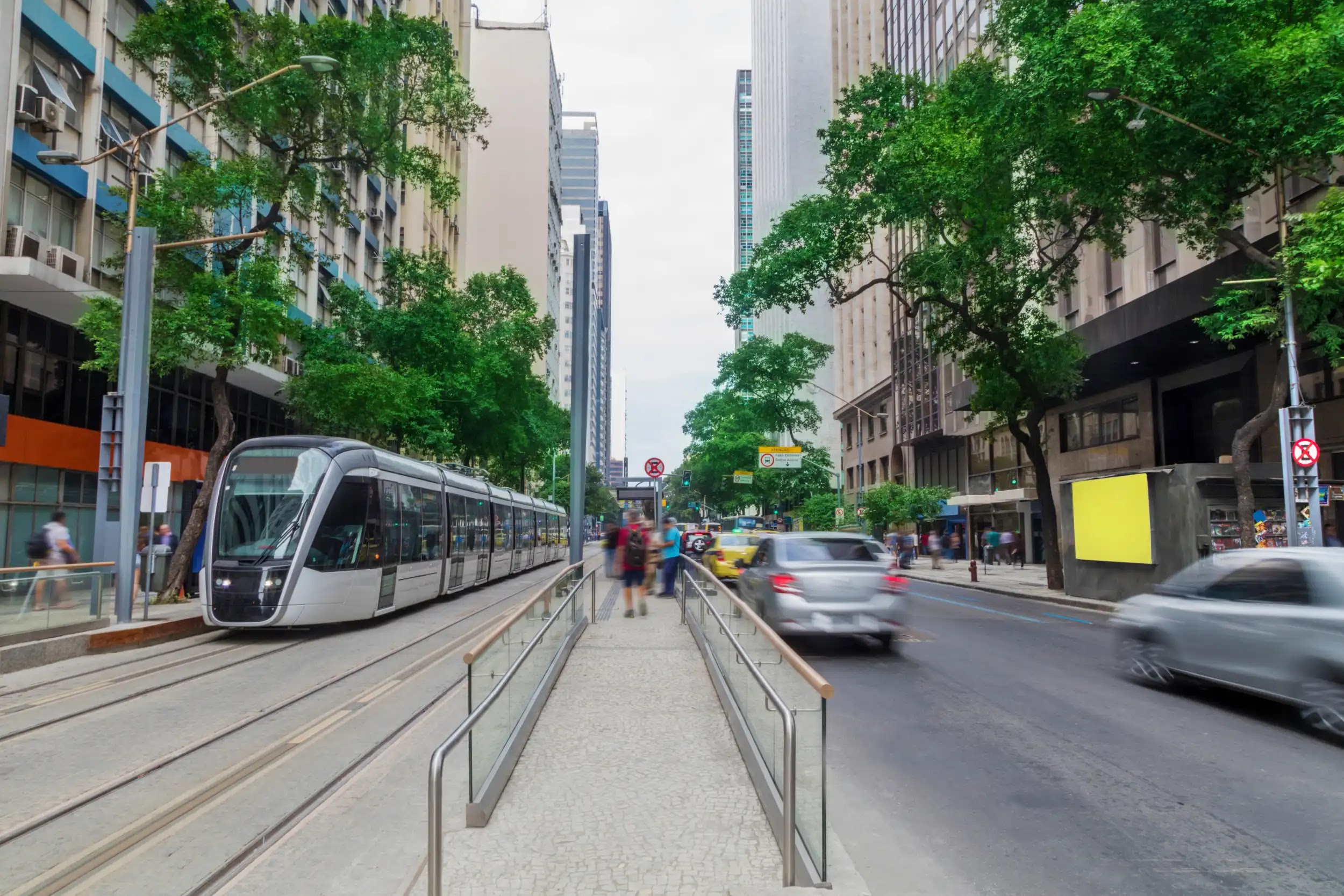
Driving a Sustainable Future: How Google’s Transportation Solutions are Helping Transform Mobility in Brazil
Read story-
To estimate aggregate enabled emissions reductions, we first estimate annual reductions for nine product solutions individually (Google Earth, Nest thermostats, Solar API, Ignite Energy Access, fuel-efficient routing, Green Light, alternative route suggestions, Contrails, and Waymo) and then combine the totals. For details about the individual calculation methodologies, refer to the respective endnotes for each product solution in our 2026 Environmental Report. We continue to work to refine our methodologies and inputs for these estimates.
-
“Sixth Assessment Report,” IPCC, April 2022.
-
Estimated energy savings are calculated based on the average percentages for heating and cooling savings found in real-world studies of the Nest Learning Thermostat in the U.S. and U.K., and generalized for Nest thermostat usage worldwide, assuming user opt-in for available energy-saving features. To calculate the total Nest savings, we applied the savings percentages to the actual heating and cooling hours of all Nest thermostats in use since 2011. As of January 2023, we use an updated energy savings calculation methodology to account for changes in common HVAC sizes and efficiencies, applying the respective energy savings percentages to Nest thermostats in North America and in European countries.
-
“Energy Statistics Data Browser: Malaysia,” IEA, last accessed March 2026. Malaysia's total electricity consumption was approximately 178 TWh in 2023.